
How Much Does It Cost to Travel Full-Time?
The Great Travel Myth: You Don’t Need a Fortune to See the World
The most common misconception floating around the internet today is that you need to be a trust-fund baby or a crypto-millionaire to sustain a life on the road. People often assume you need to be wealthy to travel full-time, but after years of navigating different continents, I can tell you that the reality is far more grounded. In fact, for many of us, our monthly expenses on the road are often lower than our previous cost of living in a major US city like Austin, Seattle, or New York.
When you stop paying a $2,500 mortgage or rent, plus utilities, car insurance, and overpriced city taxes, your financial perspective shifts. You realize that the "real world" is actually the expensive one. The question isn't whether you can afford to travel; it's whether you can afford not to, once you see the potential for geo-arbitrage. If you’ve ever wondered how much does it cost to travel full-time, the answer is likely less than what you’re spending right now to sit in traffic.
Accommodation: The Anchor of Your Monthly Budget
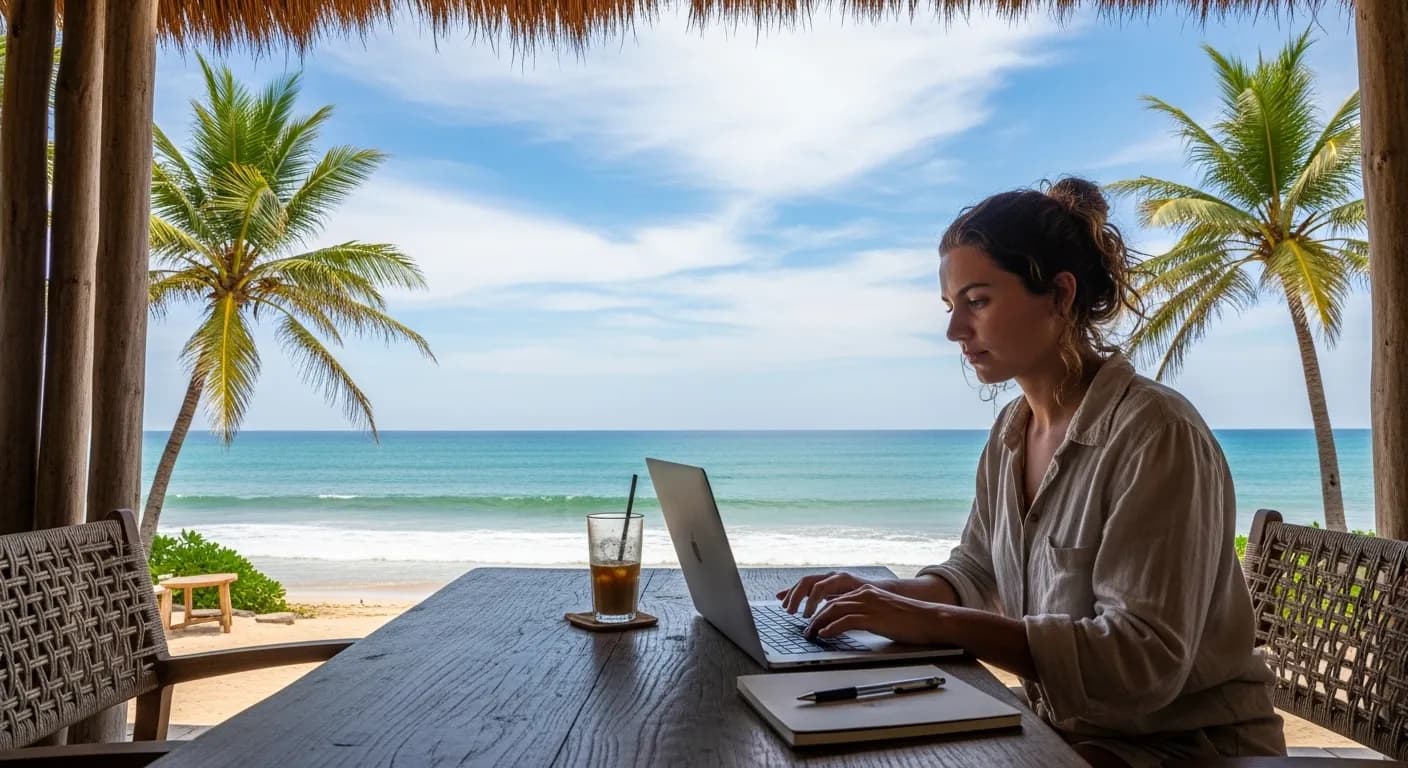
Accommodation is almost always the biggest variable in any travel budget. Depending on your standards and your location, this can range from $1,500 to $2,500 per month. However, the value you get for that money fluctuates wildly based on geography.
In Southeast Asia, a budget of $1,500 doesn't just get you a room; it often secures a luxury villa with a private pool, high-speed fiber internet, and a cleaning service. Conversely, in Western Europe or North America, $2,500 might only get you a modest, two-bedroom apartment in a secondary city.
To keep these costs manageable, we utilize a few specific strategies:
- The 28-Day Rule: We use Airbnb for monthly stays to get significant discounts. Most hosts offer 30% to 50% off if you book for at least 28 days.
- Slow Travel: By moving less frequently, you eliminate the "vacation tax" of nightly hotel rates.
- Direct Booking: Once we find a place we like, we often negotiate a direct rate with the landlord for the second or third month, bypassing platform fees.
Food and Dining: Eating Like a Local vs. Living Like a Tourist
One of the quickest ways to blow a travel budget is by eating every meal at a restaurant designed for tourists. Our monthly food spend typically hovers between $800 and $1,200. This covers everything from groceries to high-end dinners.
To maintain this balance, we follow a 60/40 rule: we cook about 60% of our meals at home and eat out for the rest. This is why having a kitchen in our accommodation is non-negotiable. Visiting local markets not only keeps costs down but also provides a deeper cultural experience than any guided tour could.
Street food and local markets are the lifeblood of a budget-conscious traveler. In places like Mexico or Thailand, you can eat a world-class meal for $3 to $5. However, the budget creeps up when you crave "comfort food." Occasional Western-style meals—think a real sourdough pizza or a specialty coffee—are what drive the budget toward that $1,200 mark.

Transportation: The Hidden Cost of Moving Too Fast
When people ask how much does it cost to travel full-time, they often forget to factor in the cost of actually getting from point A to point B. Our transportation budget sits between $300 and $600 per month.
This includes local transit, scooter rentals (a staple in Bali and Vietnam), and the occasional domestic flight or train ride. The secret to keeping this number low is, again, slow travel. We typically stay 1–3 months per location. If you fly every four days, your transportation costs will skyrocket. If you take one flight a month and use public buses or your own two feet the rest of the time, the savings are massive.
For those wondering how much does it cost to travel full time on a budget, the answer often lies in your transit choices. Taking the night train in Europe or the "colectivo" in Central America can save you hundreds of dollars compared to short-haul flights and private Ubers.
Health and Safety: Why Insurance is Non-Negotiable
If you can’t afford travel insurance, you can’t afford to travel. We carry comprehensive global health insurance, which costs us roughly $250 per month. This is a fixed, non-negotiable cost.
Unlike standard "travel insurance" which covers lost luggage and trip cancellations, global health insurance is designed for expats and long-term travelers. It covers routine check-ups, emergencies, and sometimes even dental. We view this as an investment in our peace of mind. Without it, a single scooter accident or a bout of tropical fever could end your journey and deplete your savings instantly.
Activities, Education, and the "Joy" Fund
What is the point of traveling the world if you can't afford to see it? We allocate about $400 per month for activities and education. This includes:
- Museum entrance fees and historical site tours.
- Online curriculum subscriptions for ongoing learning.
- The occasional splurge, such as a professional snorkeling trip or a guided mountain trek.
By budgeting for "fun" specifically, you avoid the guilt of spending money. It allows you to say "yes" to the experiences that make full-time travel worth it in the first place.

Total Monthly Breakdown: The Bottom Line
When you add it all up, our typical monthly expenditure ranges from $3,250 to $4,950.
- Accommodation: $1,500 – $2,500
- Food: $800 – $1,200
- Transportation: $300 – $600
- Insurance: $250
- Activities: $400
Compare this to the cost of living in San Francisco, London, or Sydney, where $3,250 might barely cover your rent and basic utilities. By leveraging geo-arbitrage—earning in a strong currency like USD or EUR while living in countries with a lower cost of living—we are able to save more money now than we ever did living a traditional lifestyle.
Value Insight: How to Optimize Your Travel Finances
If you are looking to lower the cost even further, consider these professional "hacks" used by long-term travelers:
- Banking Fees: Use a card like Charles Schwab (US) or Revolut/Monzo (UK/EU) that offers fee-free international ATM withdrawals. Those $5 ATM fees add up to hundreds of dollars over a year.
- Credit Card Churning: Use travel reward credit cards to pay for your everyday expenses. The points earned can often cover your long-haul international flights, which we haven't even included in the monthly budget because we usually pay for them with points.
- Off-Season Travel: Visit "shoulder season" destinations. Southern Europe in October is beautiful, half the price, and significantly less crowded than in July.
- Housesitting: Platforms like TrustedHousesitters allow you to stay in beautiful homes for free in exchange for looking after someone's pet. This can bring your accommodation cost down to zero.
How Much Does It Cost to Travel Full Time on a Budget?
If the $3,000+ range sounds too high, don't worry. It is entirely possible to travel full-time on a "backpacker" budget of $1,500 to $2,000 per month.
To achieve this, you would:
- Stay in hostel dorms or very basic guesthouses.
- Eat exclusively at street stalls and local markets.
- Stick to regions like Southeast Asia, South Asia, or parts of Central America.
- Use only ground transportation (buses and trains).
The beauty of full-time travel is that it is a "choose your own adventure" financial model. You can live like royalty for $5,000 or live comfortably and adventurously for $2,000.
Conclusion: The Price of Freedom
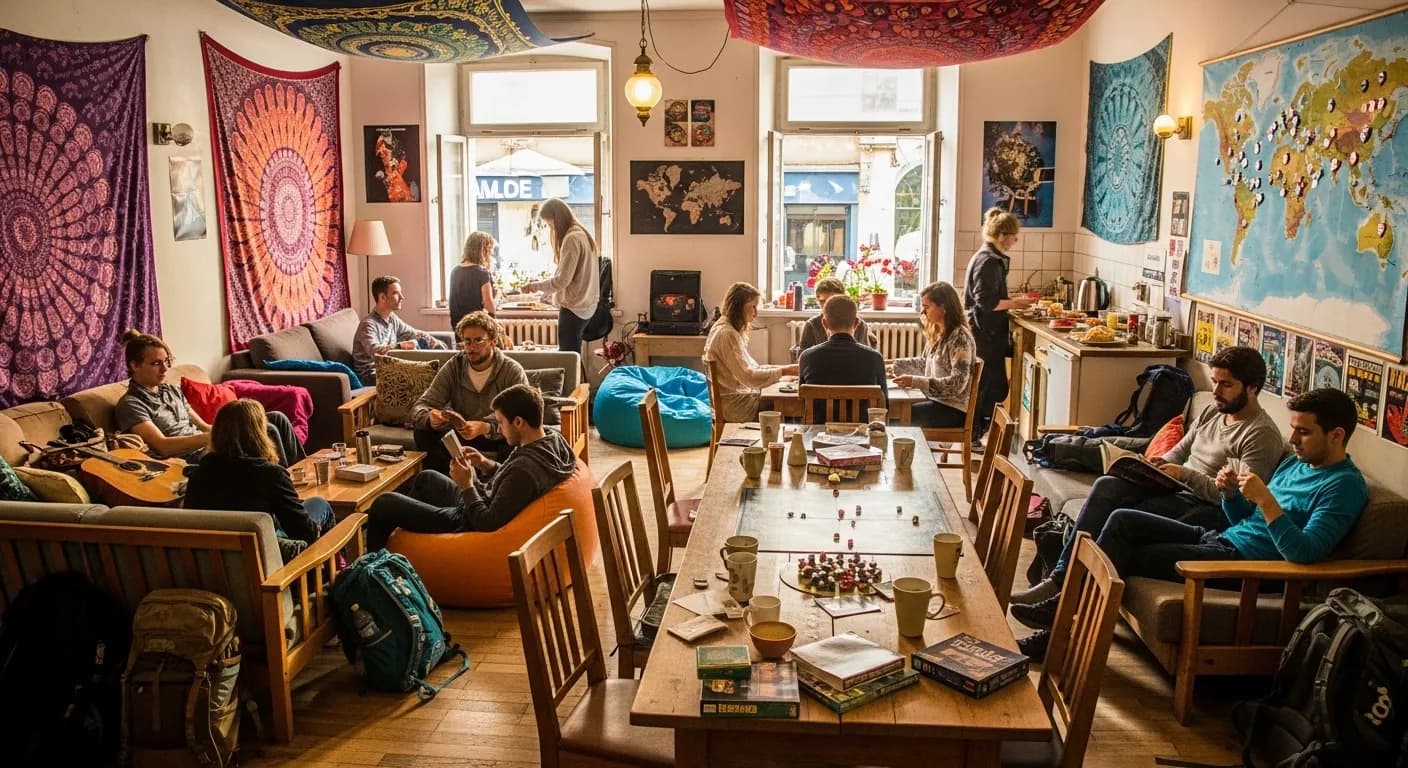
Ultimately, the question of how much does it cost to travel full-time is less about the number and more about your priorities. If you value luxury and convenience, you will pay for it. If you value culture, slow movement, and local immersion, you will find that the world is surprisingly affordable.
Traveling full-time isn't an escape from reality; it’s a restructuring of it. It’s about choosing to spend your hard-earned money on experiences and memories rather than property taxes and car payments.
FAQ
1. Do I need to pay taxes while traveling full-time?
Yes. Most countries tax you based on your citizenship or residency status. For US citizens, you are taxed on worldwide income regardless of where you live, though you may qualify for the Foreign Earned Income Exclusion (FEIE) if you stay outside the country long enough. Always consult a tax professional.
2. Is it cheaper to travel as a couple or a solo traveler?
Generally, it is cheaper as a couple. You can split the cost of accommodation, which is your largest expense. A $1,500 apartment costs $750 each for a couple, but the full $1,500 for a solo traveler.
3. How do you handle phone data and internet?
We almost always buy local SIM cards. They are significantly cheaper than international roaming plans. In many countries, you can get 50GB of data for less than $15. For backup, we use eSIM providers like Airalo.
4. What about emergency expenses?
We recommend keeping an "emergency fund" of at least $5,000 in a high-yield savings account. This is separate from your travel budget and is only for true emergencies, like an unplanned flight home or a major tech failure (like a broken laptop).
5. Can I travel full-time while working a 9-5?
It depends on your employer's policy regarding "digital nomads." Many companies allow remote work but have restrictions on which countries you can work from due to legal and tax implications. Always be transparent with your employer before making the leap.
AdSense Placeholder (728x90 or 300x250)
Join Our Nomad Family
Get weekly tips on smart family travel, remote work strategies, and homeschooling resources delivered straight to your inbox.
We respect your privacy. Unsubscribe at any time.