Real Stories of Digital Nomad Families
The Unfiltered Reality of Global Parenting
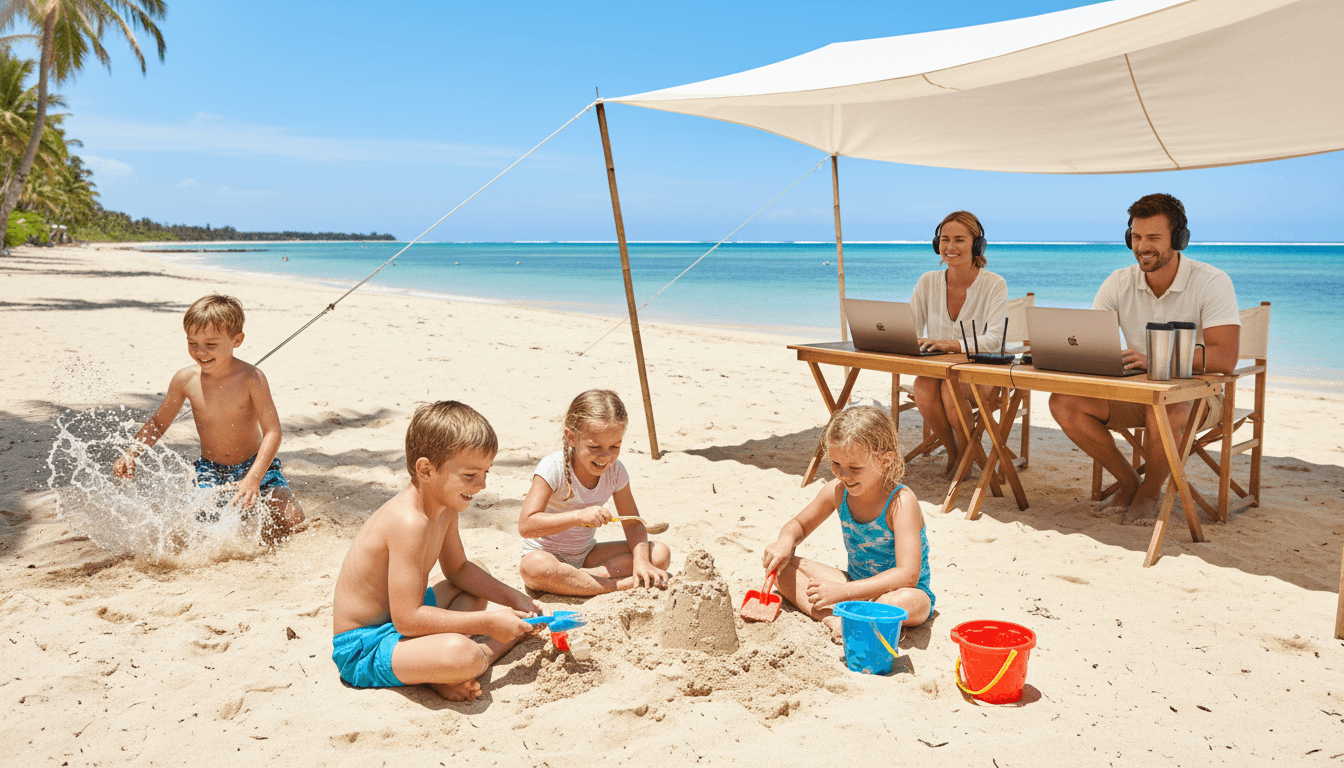
If you scroll through Instagram, the modern nomadic lifestyle looks like a perpetual vacation. You see sun-drenched toddlers playing on white sand beaches while their parents tap away at sleek MacBooks under a palm tree. But as anyone who has actually lived it will tell you, the "laptop on the beach" trope is a logistical nightmare involving glare, sand in keyboards, and spotty Wi-Fi.
We’ve been living this life for years, and we know that real stories of digital nomad families are rarely that polished. They are filled with missed flights, 3 AM deadlines, and the desperate search for a pediatrician in a city where you don’t speak the language. Yet, despite the chaos, thousands of families are ditching the white-picket-fence dream for something more fluid.
This article is part of our comprehensive family travel series. Be sure to check out our Ultimate Guide to Family Travel in 2026 for a complete overview of how the landscape of global exploration is shifting.
Defining the Nomadic Family Meaning in 2024 and Beyond
Before diving into the anecdotes, we need to address the nomadic family meaning. In the past, "nomad" implied a lack of roots or perhaps a struggle. Today, being a nomadic family is a deliberate design choice. It is the act of prioritizing experiences and global education over material stability and a fixed zip code.
A nomadic family isn't necessarily one that moves every week. In fact, most successful families practice "slowmading"—staying in one location for 1 to 3 months. This allows the parents to actually get work done and the children to form temporary but meaningful social bonds. It’s about creating a "home" within the family unit rather than within four walls.

Real Stories of Digital Nomad Families: Lessons from the Road
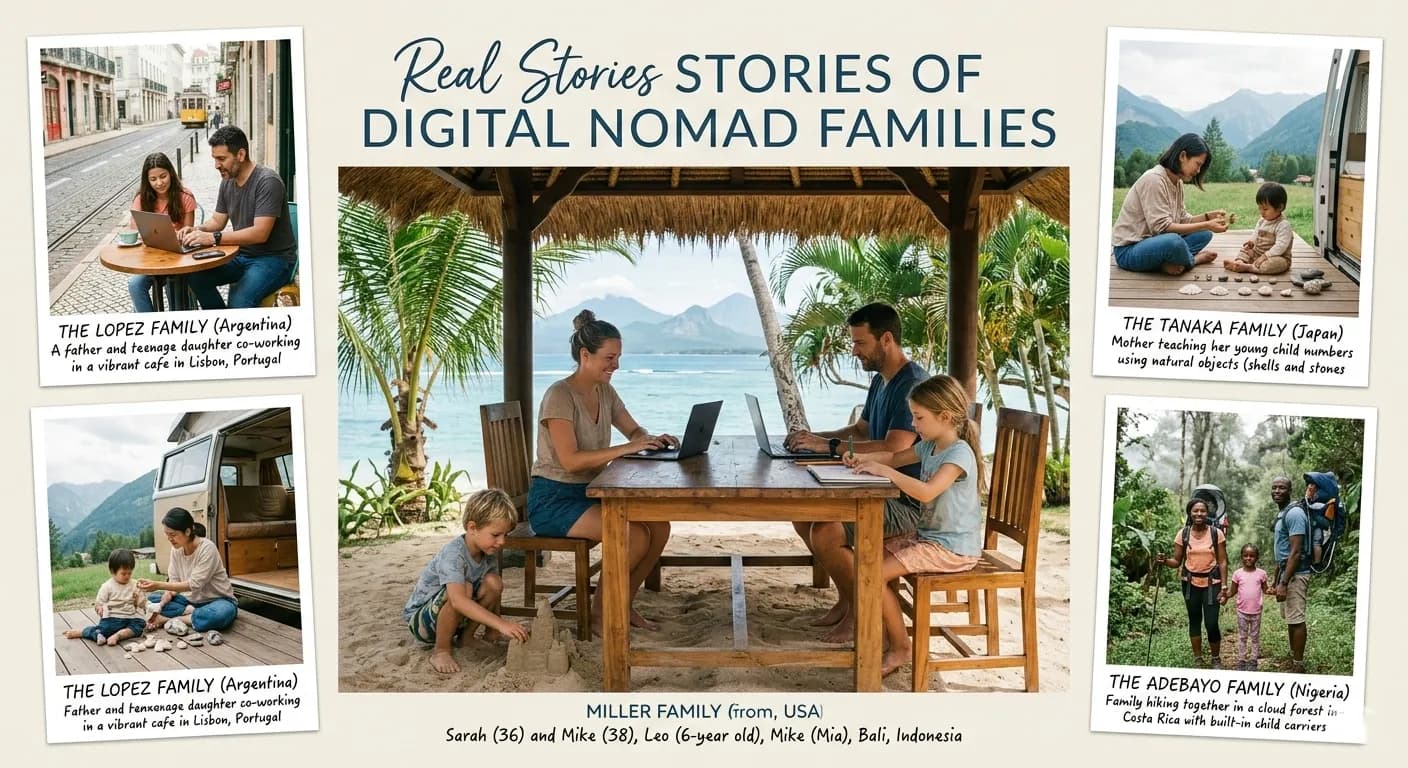
To understand how this works, we looked at several families who have been on the road for more than two years. Their real stories of digital nomad families reveal a common thread: the transition is never easy, but it is almost always worth it.
Take the Miller family, for example. They left a high-stress corporate life in London with a 5-year-old and a 7-year-old. Their first three months in Mexico were a disaster. They dealt with "Montezuma’s Revenge," a failed Airbnb booking, and the realization that they hadn't budgeted enough for high-speed internet.
However, by month six, they had found their rhythm. They learned that a nomadic family needs a strict routine. The parents worked in shifts—one in the morning while the other took the kids to a local museum, then swapping in the afternoon. This balance is crucial, and if you're struggling with it, you should read our guide on Balancing Work and Parenting While Traveling.
The Logistics of Education and "Worldschooling"
One of the biggest hurdles for any nomadic family is education. How do you ensure your child doesn't fall behind? The modern nomadic lifestyle has birthed a movement known as "worldschooling."
Instead of learning about the Roman Empire from a textbook, these children are walking through the Colosseum. Instead of a biology lab, they are snorkeling in the Great Barrier Reef. Most families use a hybrid approach:
- Online Curriculum: Using platforms like Khan Academy or specialized remote schools.
- Local Immersion: Enrolling kids in short-term local "forest schools" or language camps.
- Unschooling: Allowing the child’s interests and the current location to dictate the curriculum.
If you are still wondering if this is feasible for your specific situation, we have an in-depth analysis on Can You Be a Digital Nomad With Kids? that breaks down age-specific challenges.
The Financial Architecture of a Modern Nomadic Lifestyle
You don't need to be a millionaire to join the ranks of real stories of digital nomad families, but you do need a solid financial plan. Most families we interviewed fall into three categories:
- Remote Employees: Working for tech companies or agencies that allow 100% remote work.
- Freelancers/Entrepreneurs: Running SEO agencies, consulting firms, or e-commerce stores.
- Passive Income Earners: Families living off rental income or investments.
The key to the modern nomadic lifestyle is geo-arbitrage—earning in a strong currency (like USD or EUR) and spending in a country with a lower cost of living (sech as Vietnam, Portugal, or Colombia). This allows a nomadic family to afford private tutors, better housing, and high-quality healthcare that might be out of reach in their home country.
For those worried about the "how-to" of finances, check out our resource on How to Budget for Long-Term Travel.
Overcoming the "Loneliness" Factor
If you read real stories of digital nomad families, you'll notice a recurring theme: the search for community. It can be lonely for both parents and kids to constantly say goodbye.
To combat this, the modern nomadic lifestyle has evolved to include "nomad hubs." Cities like Bansko (Bulgaria), Canggu (Bali), and Medellin (Colombia) have become magnets for families. There are now "Nomad Family Summits" and "Pop-up Hubs" where dozens of families descend on a single town for a month to work and play together. This ensures the kids have a consistent peer group, even if that group moves from country to country.

Essential Strategies for Success
After analyzing hundreds of real stories of digital nomad families, we’ve identified three "Golden Rules" that separate those who thrive from those who burn out within six months.
1. The 80/20 Rule of Planning
Research 80% of your destination, but leave 20% to chance. You need to know where the hospital is and if the Wi-Fi is fiber-optic, but you also need the flexibility to change your plans if you find a town you absolutely love (or hate).
2. Prioritize "Slow" Over "Fast"
A nomadic family cannot travel like a backpacker. Moving every three days will lead to emotional breakdowns for the children and professional failure for the parents. Aim for a minimum of 30 days in one spot.
3. Investment in Gear
Don't skimp on the essentials. This includes noise-canceling headphones (for the working parent), high-quality travel strollers, and a "universal" roaming data plan. Your gear is your infrastructure.
Value Section: Practical Tips for Aspiring Nomadic Families
If you are ready to transition into a nomadic family, here are some expert-level insights that aren't usually discussed in the "dreamy" blog posts:
- The "Buffer" Day: Never plan work on travel days. If you are moving from Lisbon to Athens, assume that entire day is a write-off. Flights get delayed, kids get cranky, and the new Airbnb might have a broken lock.
- Health Insurance is Non-Negotiable: Use specialized nomad insurance (like SafetyWing or Genki) that specifically covers families and remote work scenarios.
- The "One In, One Out" Rule: Space is at a premium. If your child gets a new toy, an old one must be donated. This teaches kids the nomadic family meaning of valuing experiences over possessions.
- Co-working with Childcare: Look for co-working spaces that offer on-site creches or childcare. They are becoming increasingly common in digital nomad hubs.
FAQ
Is it legal to be a nomadic family with school-aged children? Legality depends on your home country's homeschooling laws. Many families maintain a legal residence in a "homeschool-friendly" state or country while traveling. Always research your specific citizenship requirements.
How do nomadic families handle healthcare? Most use international health insurance designed for nomads. For routine check-ups, many families choose "medical tourism" hubs like Thailand or Mexico, where private healthcare is affordable and world-class.
Does being a nomadic family hurt a child's social development? On the contrary, many real stories of digital nomad families suggest these children become more adaptable, empathetic, and culturally aware. However, it requires a proactive effort from parents to find social "hubs" for their kids.
What is the best age for kids to start the modern nomadic lifestyle? There is no perfect age. Toddlers are portable but require more "stuff," while teenagers benefit from the cultural exposure but might miss their established social circles. Many find the "sweet spot" to be between ages 5 and 12.
How much does the nomadic family lifestyle cost per month? It varies wildly. A family of four can live comfortably in Southeast Asia for $3,000/month, while the same lifestyle in Western Europe might require $6,000–$8,000/month.
AdSense Placeholder (728x90 or 300x250)
Join Our Nomad Family
Get weekly tips on smart family travel, remote work strategies, and homeschooling resources delivered straight to your inbox.
We respect your privacy. Unsubscribe at any time.
Related Articles