How Much Does It Cost to Travel the World as a Family?
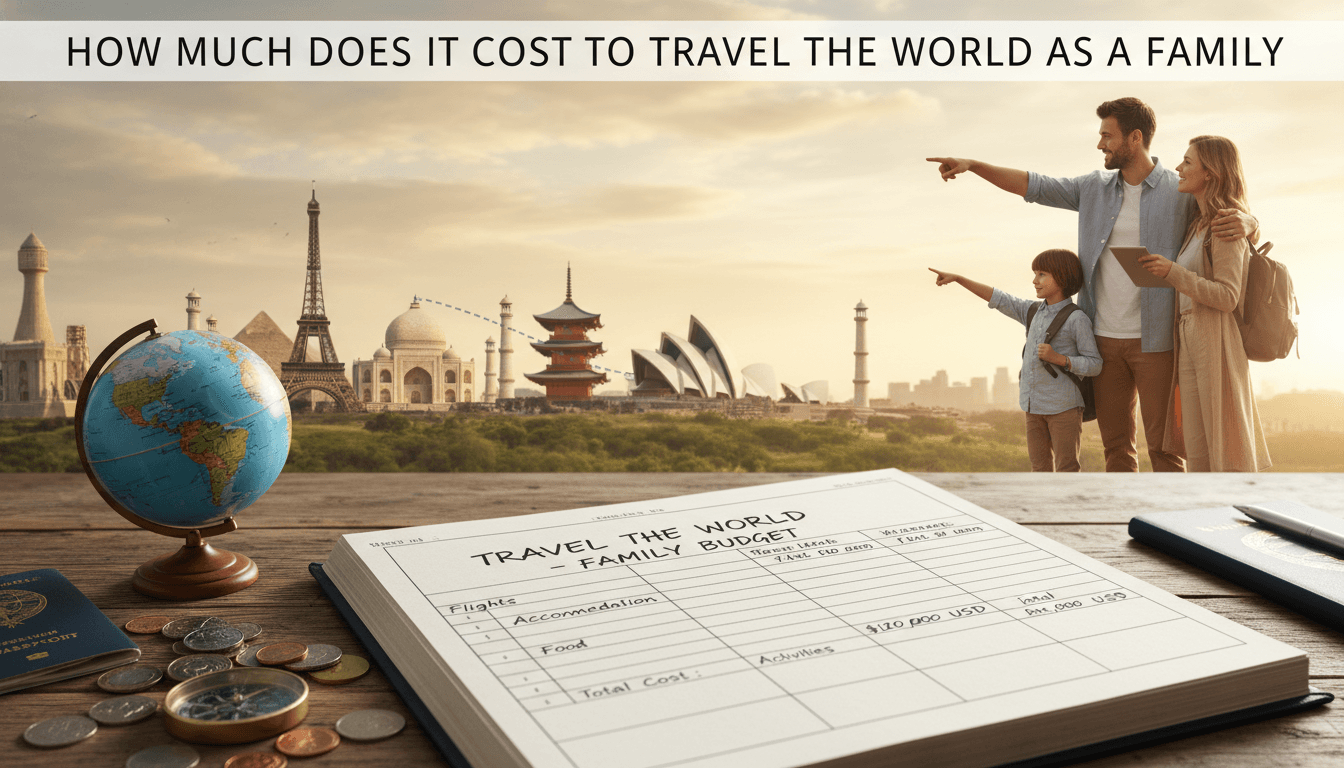
The dream starts with a simple "What if?" What if you traded the morning school run for a sunrise in Cappadocia? What if the office cubicle was replaced by a beachfront cafe in Thailand? But then, reality hits like a cold wave: the finances. The most common question we get asked as a full-time digital nomad family isn't about the best beaches or the safest cities—it’s always, "How much does it cost to travel the world as a family?"
There is no sugar-coating it: long-term travel is a financial commitment. However, it is often far more affordable than people realize, especially when compared to the skyrocketing cost of living in major Western cities. Whether you are planning a gap year or a permanent lifestyle shift, understanding the financial architecture of a world trip is the difference between a stressful ordeal and a life-changing adventure.
This article is part of our comprehensive family travel series. Be sure to check out our Ultimate Guide to Family Travel in 2026 for a complete overview.
The Budget Spectrum: Why There Is No Single Answer
When people ask about the price tag of global exploration, they are often looking for a single number. The truth is that your budget will depend on three main "levers": Speed, Style, and Selection.
- Speed: The faster you move, the more you spend. Transport is one of the biggest expenses. Staying in one city for a month is significantly cheaper than visiting four cities in the same timeframe.
- Style: Are you "flashpacking" (boutique Airbnbs and nice dinners) or "shoestringing" (hostel family rooms and street food)?
- Selection: Spending a month in Switzerland will cost four times more than a month in Vietnam.
Generally, for a family of four, budgets can range from $3,500 to $10,000 per month. While that sounds like a wide gap, most "comfortable" nomadic families find their sweet spot around the $5,000–$6,000 mark.

Breaking Down the Big Expenses: Where the Money Goes
To answer how much does it cost to travel the world as a family, we need to dissect the monthly outgoings. Unlike a two-week vacation, long-term travel involves "living" costs rather than "holidaying" costs.
Accommodation (30%–45% of Budget)
This is usually your largest fixed cost. As a family, you can’t just grab two bunks in a dorm. You need space, a kitchen to save on food, and reliable Wi-Fi if you’re working. In Southeast Asia, a luxury 2-bedroom villa might cost $1,500 a month. In London or New York, a cramped apartment could easily set you back $4,500.
Food and Dining (20%–25% of Budget)
One of the biggest mistakes new travelers make is eating out three times a day. To keep costs sustainable, we follow the "2-1 rule": two meals at home, one meal out. This not only saves money but also keeps the kids' diets somewhat familiar and healthy.
Transportation and Flights
Flight hopping is a budget killer. To keep your overheads low, prioritize overland travel (trains and buses) or use budget airlines strategically. For more specific tips on this, read our guide on How to Save Money on Family Flights.
The 6 Month Round the World Trip Cost: A Realistic Benchmark
For many families, a six-month sabbatical is the "Goldilocks" length—long enough to disconnect, but short enough to manage without selling every asset. So, what is a realistic 6 month round the world trip cost?
Based on data from dozens of traveling families, a mid-range 6-month journey typically costs between $25,000 and $45,000 for a family of four.
- The "Budget" Route ($25k): Focusing heavily on Central America, Southeast Asia, and Eastern Europe. Utilizing slow travel and cooking 80% of meals.
- The "Mid-Range" Route ($35k - $40k): A mix of affordable and expensive regions (e.g., 3 months in Asia, 2 months in Europe, 1 month in the USA). Includes more paid activities like Disney or guided treks.
- The "High-End" Route ($60k+): Frequent flights, stays in international hotel chains, and premium insurance plans.

Regional Cost Comparison: Where Your Dollar Stretches
If you are worried about how much does it cost to travel the world as a family, the easiest way to lower the price is to change your destination.
- Southeast Asia: The holy grail for budget travelers. Countries like Thailand, Vietnam, and Indonesia offer incredible value. You can live like royalty for $4,000 a month. But wait, Is Bali Good for Family Travel? Absolutely—it remains one of the most cost-effective hubs for nomadic families.
- Western Europe: Expect to pay double or triple your Asian budget. However, you can mitigate this by visiting during the shoulder season. For a deep dive into these costs, check out our Budget Breakdown: 1 Month in Europe With Kids.
- Latin America: Mexico, Colombia, and Guatemala offer a middle ground. Costs are higher than in Vietnam but significantly lower than in the US or Europe.
The "Hidden" Costs You Probably Forgot
When calculating how much does it cost to travel the world as a family, most people remember flights and hotels but forget the "invisible" drains on the bank account.
- Travel Insurance: This is non-negotiable. For a family, a comprehensive plan (like SafetyWing or World Nomads) can cost $150–$300 per month.
- Visas: Some visas are free; others, like a family set for a multi-entry country, can cost $400+.
- ATM Fees and Currency Conversion: Those 3% fees add up. Use travel-friendly banks like Revolut or Wise to save hundreds over a year.
- Electronic Upkeep: Laptops break, phones get dropped. Having a "tech emergency fund" is vital for digital nomads.
Value Section: Strategic Tips to Slash Your Expenses
After years on the road, we’ve identified several "pro moves" that can reduce your total spend by up to 30% without sacrificing comfort.
- The "Slow Travel" Rule: Stay at least 28 days in one Airbnb. Most hosts offer a monthly discount of 30% to 50%. This one tip alone can save you thousands.
- Geo-Arbitrage: Earn in a strong currency (USD, EUR, GBP) and spend in a weaker one (IDR, THB, MXN). This is the secret sauce of the digital nomad family.
- Housesitting: Use platforms like TrustedHousesitters. You look after someone’s pet and home in exchange for free accommodation. This is a game-changer for expensive regions like Australia or the UK.
- Local Schooling/Daycare: Instead of expensive international "pop-up" schools, look for local hubs or "worldschooling" Facebook groups where costs are shared among families.
Managing Finances While Working Remotely
If you aren't traveling on savings alone, your budget needs to account for "work productivity." This might mean paying extra for a co-working space or an apartment with a dedicated office nook.
When calculating how much does it cost to travel the world as a family, don't forget to factor in the cost of your time. If a $20 bus takes 12 hours but a $60 flight takes 1 hour, the flight might actually be "cheaper" if it allows you to finish a project for a client.

FAQ
1. Is it cheaper to travel or stay at home? Surprisingly, for many families living in high-cost cities like San Francisco, London, or Sydney, traveling the world can actually be cheaper than staying home, provided you spend time in lower-cost regions.
2. How much should I save before leaving? We recommend having at least 3 months of your estimated budget as an emergency fund, plus the cost of your initial "big" flights. If your budget is $5,000/month, aim for $15,000 in savings plus your startup costs.
3. Does the 6 month round the world trip cost include gear? Usually, no. You should budget an additional $1,000–$2,000 for high-quality luggage, travel strollers, lightweight clothing, and any necessary tech upgrades before you depart.
4. How do families handle healthcare costs? Most use international health insurance. For routine visits (dentist, minor checkups), many families choose to pay "out of pocket" in countries like Thailand or Mexico, where high-quality private care is very affordable.
5. What is the most expensive part of family travel? Last-minute flexibility. Booking flights or accommodation 24 hours in advance can cost 3x more than booking a month out. Planning is your best friend when it comes to the bottom line.
Final Thoughts
Determining how much does it cost to travel the world as a family is less about the math and more about your priorities. If you value luxury and speed, the price is high. If you value connection, culture, and slow movement, the world becomes surprisingly accessible.
The memories of your children seeing the Colosseum for the first time or learning to surf in Bali are investments that never depreciate. Start with a clear budget, stay flexible, and remember: the best things in travel—the sunsets, the local friendships, and the sense of freedom—are often the things that cost the least.
AdSense Placeholder (728x90 or 300x250)
Join Our Nomad Family
Get weekly tips on smart family travel, remote work strategies, and homeschooling resources delivered straight to your inbox.
We respect your privacy. Unsubscribe at any time.
Related Articles