How to Avoid Travel Burnout With Kids
Pendahuluan
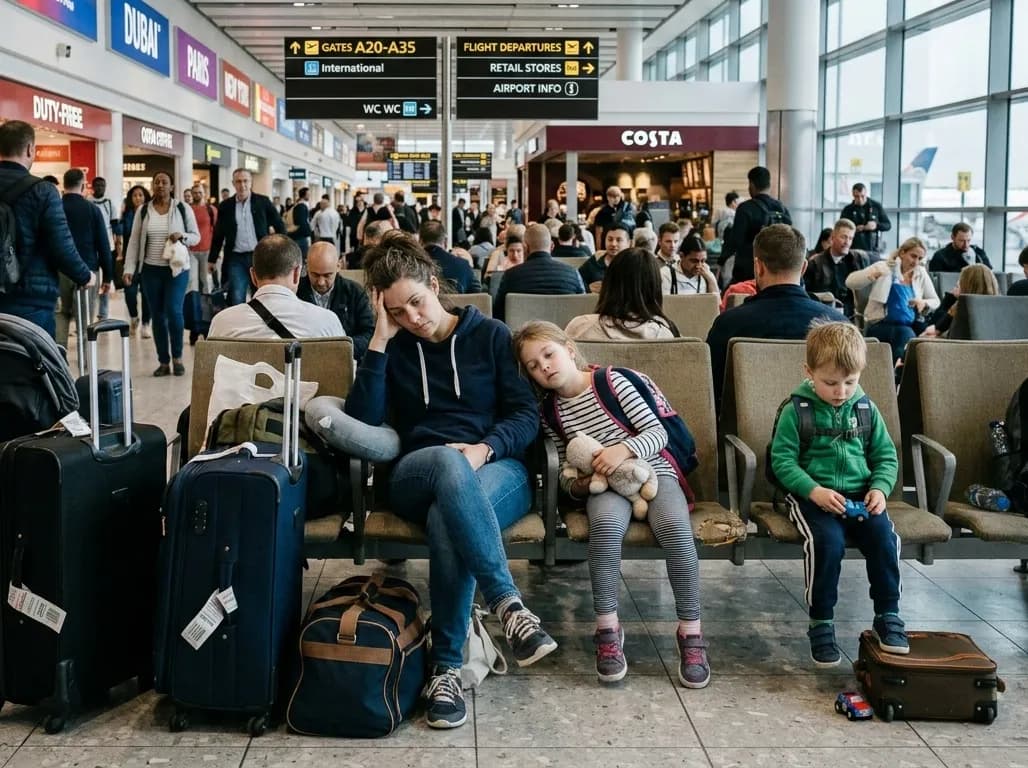
Picture this: You are standing in the middle of a stunning cobblestone street in Rome, the sun is setting perfectly over the Pantheon, and all you want to do is cry into your gelato. Your toddler is screaming because their socks feel "too blue," your teenager hasn't looked up from their phone in three countries, and you can’t remember the last time you had a conversation that didn't involve logistics or discipline. This, my friend, is the threshold of the "travel wall."
Learning how to avoid travel burnout with kids isn't just a luxury for digital nomad families; it is a survival skill. We often transition into this lifestyle seeking freedom and connection, only to find ourselves more stressed than we were in a traditional 9-to-5. The constant change of environment, combined with the relentless demands of parenting and remote work, can lead to a specific type of exhaustion that a simple "vacation" cannot fix.
This article is part of our comprehensive family travel series. Be sure to check out our Ultimate Guide to Family Travel in 2026 for a complete overview.
The Reality Check: What Age is Hardest to Travel With Kids?
Before we dive into the solutions, we need to address the biological and developmental reality of the situation. Many parents ask, what age is hardest to travel with kids? While every child is different, most veteran travel parents agree that the "toddler gap"—roughly ages 12 months to 3 years—is the most challenging.
At this age, children are mobile enough to get into trouble but lack the impulse control or communication skills to follow complex instructions. They thrive on routine, which is the very thing travel often disrupts. However, burnout isn't limited to parents of toddlers. School-aged children bring academic pressures and social FOMO, while teenagers bring a need for autonomy that can clash with a tight itinerary. Understanding that the difficulty level shifts rather than disappears is the first step in managing your expectations.
How to Deal With Burnout When You Have Kids?
When the fatigue sets in, it’s rarely just physical. It’s decision fatigue. It’s the mental load of being the navigator, the chef, the entertainer, and the employee all at once. If you’re wondering how to deal with burnout when you have kids, the answer lies in radical boundary setting.
You cannot "power through" burnout. Instead, you must lean into a slower pace. Burnout happens when your output (energy spent on kids, work, and travel logistics) consistently exceeds your input (rest, inspiration, and self-care). To reverse this, you need to intentionally schedule "nothing days." These are days where the only goal is to exist in a new place—no museums, no tours, and no "must-see" landmarks.
1. Embrace the Philosophy of Slow Travel
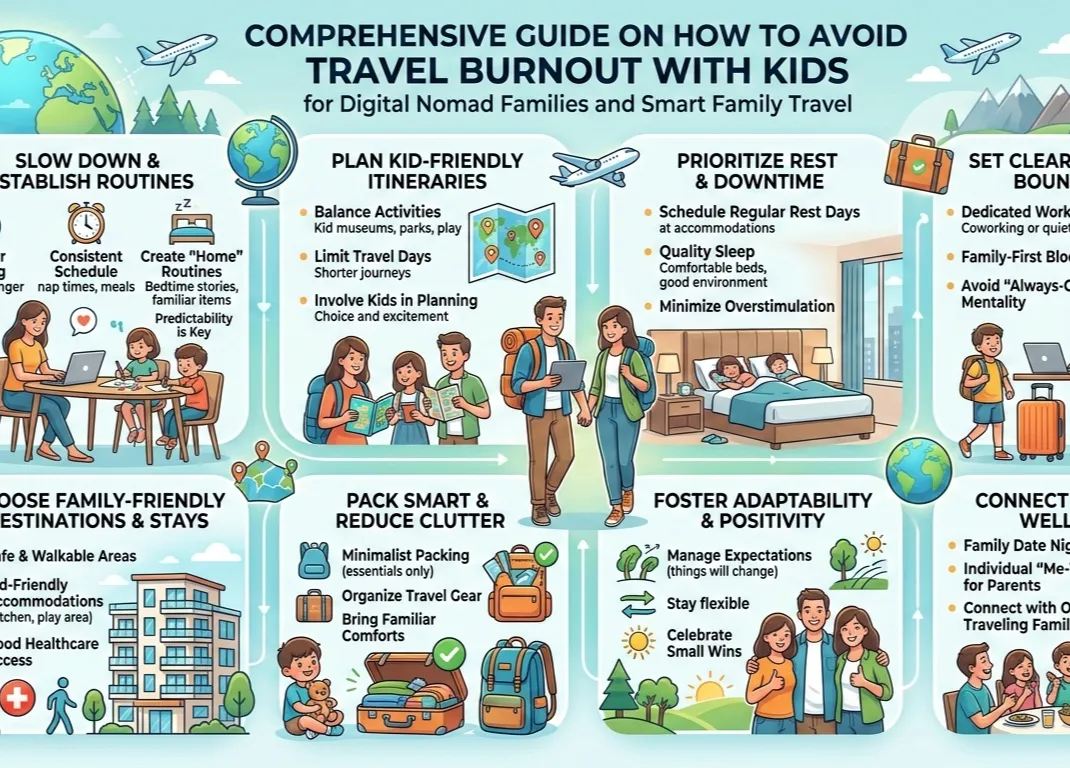
The fastest way to hit a wall is trying to see 10 cities in 14 days. For nomad families, the secret to how to avoid travel burnout with kids is staying longer in fewer places. When you stay in an apartment for a month rather than a hotel for three nights, you create a "home base."
Slow travel allows you to find a local grocery store, a favorite park, and a predictable rhythm. It reduces the stress of constant packing and unpacking. It also gives your children a sense of security; they know where they are sleeping tonight and where their toys are kept.
2. Prioritize Routine Over Sightseeing
Kids find comfort in the predictable. While the scenery outside the window changes, the "internal" landscape should remain as consistent as possible. This means keeping bedtime rituals, mealtime habits, and even "screen time" rules relatively stable.
If your child always reads a book before bed at home, do it in the Airbnb in Tokyo. If Saturday morning is pancake morning, find a way to make pancakes in Lisbon. These small anchors prevent the sensory overload that leads to meltdowns, which in turn prevents your own burnout.

3. The "One Activity a Day" Rule
One of the biggest mistakes families make is over-scheduling. To keep your sanity, adopt the "One Activity a Day" rule. Plan one significant outing—like a museum visit or a guided walk—and leave the rest of the day open for spontaneous play, rest, or work.
This approach ensures you actually enjoy the activity rather than rushing through it to get to the next one. It also leaves room for the inevitable "toddler crisis" or a sudden rainstorm without ruining the entire day's plans.
4. Invest in Safety and Logistics Early
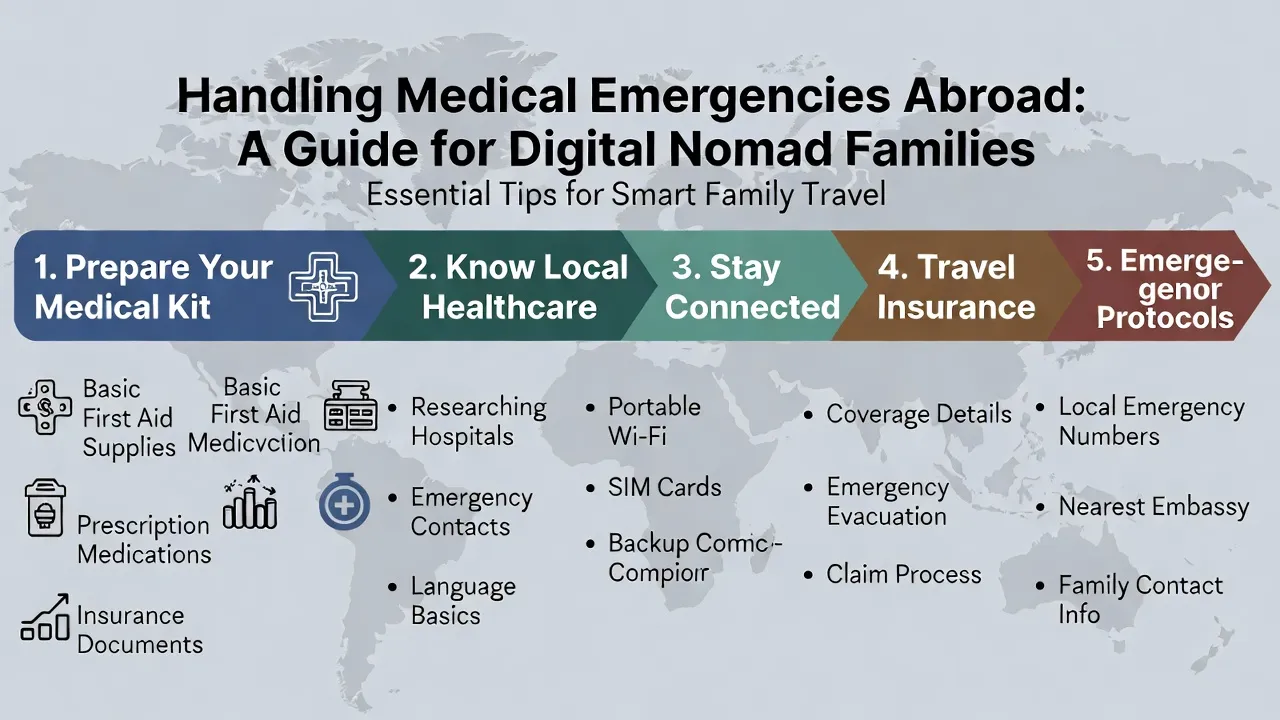
Nothing triggers burnout faster than a logistical nightmare. Whether it's a lost passport or an unexpected medical emergency, being unprepared is a recipe for disaster.
To further help you on your journey, we highly recommend reading:
Having the right insurance and safety protocols in place provides a "mental safety net." When you aren't constantly worried about the "what-ifs," you have more emotional bandwidth to handle the daily challenges of parenting on the move.
5. Create Separate Spaces for Work and Play
For digital nomads, the blur between "parenting" and "working" is the primary driver of exhaustion. When you are trying to write an email while your child is pulling at your sleeve, you are doing neither task well.
How to deal with burnout when you have kids often comes down to physical space. If possible, book accommodations with at least one separate bedroom or a dedicated workspace. If that’s not budget-friendly, utilize local co-working spaces with childcare or trade "shifts" with your partner. One parent works at a cafe for four hours while the other takes the kids to a park, then you swap.
6. Budget for Convenience
While we all want to save money, sometimes "budgeting" costs you more in mental health than it saves in dollars. If a direct flight costs $100 more but saves you an 8-hour layover with a cranky preschooler, take the direct flight.
If you're looking to expand your knowledge beyond planning, you might also find this useful:
Use the money you save on flights to occasionally "buy" your way out of stress—hire a local babysitter for a date night or use a grocery delivery service instead of dragging tired kids through a foreign supermarket.
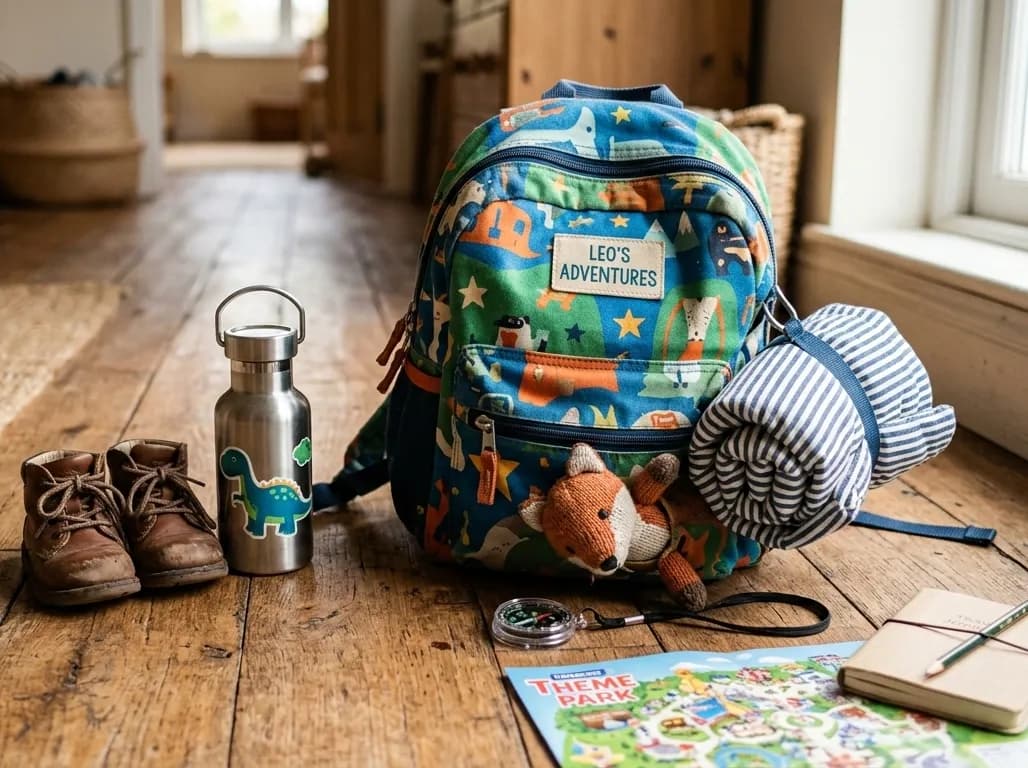
Value Section: The Nomad Parent Survival Kit
Beyond the big strategies, sometimes you need tactical tools to prevent an immediate meltdown. Here is what we recommend keeping in your "Anti-Burnout Kit":
- Noise-Canceling Headphones: Not just for the plane, but for when you need 15 minutes of mental silence while the kids are playing loudly.
- A "Home" Scent: A small travel candle or essential oil that you use at home. Scent is a powerful trigger for relaxation and familiarity.
- Offline Entertainment: Always have a tablet loaded with movies or a new coloring book for those moments when the Wi-Fi fails or the food takes too long.
- The 20-Minute Solo Walk: Negotiate with your partner for 20 minutes of total solitude every single day. No kids, no phone, just walking and breathing.
Finding Joy in the Chaos
Ultimately, learning how to avoid travel burnout with kids requires a shift in perspective. You have to accept that your travel style will look different now. You might miss the "cool" nightlife or the high-adrenaline excursions for a few years, but what you gain is a front-row seat to your children discovering the world.
When you feel the burnout creeping in, look at your kids. Are they happy? Are they learning? Usually, the kids are doing better than the parents. They don't need to see the Louvre; they just need a playground in Paris and a parent who isn't too stressed to push the swing.

FAQ
FAQ
What age is hardest to travel with kids? Most parents find the toddler years (ages 1-3) the most difficult due to their need for constant movement, lack of impulse control, and reliance on strict routines. However, every stage has unique challenges that require different planning strategies.
How to deal with burnout when you have kids while traveling? The best way to deal with burnout is to stop moving. Schedule "zero days" where you have no plans, limit yourself to one activity per day, and ensure both parents get dedicated solo time to recharge without parental responsibilities.
How can I work remotely while traveling with children without burning out? Use a "tag-team" approach with your partner to split childcare and work hours. Alternatively, seek out "family-friendly" co-working spaces or hire local temporary nannies to ensure you have focused blocks of time to work.
Does slow travel really help with burnout? Yes, slow travel is the most effective way to avoid burnout. By staying in one location for 3-4 weeks, you eliminate the stress of constant transit and allow your family to establish a healthy, sustainable routine.
What should I do if my child gets sick while traveling? Ensure you have comprehensive family travel insurance and a basic medical kit. Research local pediatricians or international hospitals in advance so you aren't scrambling during an emergency, which significantly reduces stress levels.
AdSense Placeholder (728x90 or 300x250)
Join Our Nomad Family
Get weekly tips on smart family travel, remote work strategies, and homeschooling resources delivered straight to your inbox.
We respect your privacy. Unsubscribe at any time.
Related Articles