Travel Insurance for Digital Nomad Families: 2026 Guide
Trading the School Run for the Boarding Pass
The trend is clear: more parents than ever are opting out of the traditional suburban schedule to take a family gap year or transition permanently to location-independent living. The idea of worldschooling, working from a beachside cafe in Portugal, and watching your kids learn about geography first-hand is an inspiring dream.
However, as any digital nomad parent will tell you, the logistics of long-term travel are vastly different from a standard two-week vacation. Among the dozens of check-in lists—visas, packing cubes, and remote job setups—the most critical element you must secure is specialized health and travel protection.
Finding the right digital nomad family travel insurance is not just about having a piece of paper for border control; it is about protecting your children's health, shielding your hard-earned remote income from unexpected medical bills, and giving you peace of mind while crossing borders.
In this 2026 guide, we break down how to choose the right policy for a long-term nomadic lifestyle, what features you cannot afford to skip, and how to protect your family on the road.
Why Standard Travel Insurance Fails Nomad Families
Many families embarking on a gap year make the mistake of purchasing standard holiday travel insurance. Standard policies are built for vacationers and fall short for nomads in several critical ways:
- The Return Ticket Requirement: Most traditional travel policies require you to have a booked return flight to your country of origin to remain valid. If you are slow traveling with open-ended plans, a standard policy might be completely void when you attempt to make a claim.
- Trip Duration Limits: Vacation policies typically limit coverage to trips under 30, 45, or 90 days. For families traveling for six months, a year, or indefinitely, these limits make standard policies useless.
- No Home Country Coverage: Traditional insurance cancels the moment you step foot back in your home country. If you return home for two weeks to visit grandparents or handle administrative tasks, you are left completely uninsured during that period.
- Cannot Buy While Abroad: Most standard companies require you to purchase the policy before you leave your home country. If you decide to extend your gap year while already on the road, you cannot renew a standard policy.
To compare how these features stack up against traditional premium coverages, read our comprehensive Best Travel Insurance for Families 2026: Complete Reviews and check our foundational guide on the Best Travel Insurance for Families.
Nomad Travel Insurance vs. International Health Insurance (IPMI)
When searching for the best digital nomad family travel insurance, you must decide between two primary categories:
1. Subscription Nomad Travel Insurance (Emergency Focus)
These policies function like a monthly subscription. They are designed to cover unexpected accidents, sudden illnesses, and travel disruptions (like lost baggage or flight delays).
- Pros: Highly flexible (can be bought and canceled anytime), affordable, and allows you to buy while already traveling.
- Cons: Does not cover routine checkups, preventative care, standard dental visits, or non-emergency maternity care.
- Best For: Families on a 1-year gap year, slow travelers with a tight budget, and those who maintain a primary health plan back home.
2. International Private Medical Insurance (Comprehensive Focus)
This is full global health insurance. It functions just like your domestic health insurance but works worldwide.
- Pros: Covers preventative care, vaccinations, chronic illness management, dental, vision, and routine pediatric visits.
- Cons: Expensive, requires medical underwriting (questionnaires about pre-existing conditions), and usually requires a 1-year commitment.
- Best For: Indefinite expat families, families with children who have pre-existing medical conditions, and those without any active health coverage in their home country.
Essential Features Your Nomad Policy Must Have
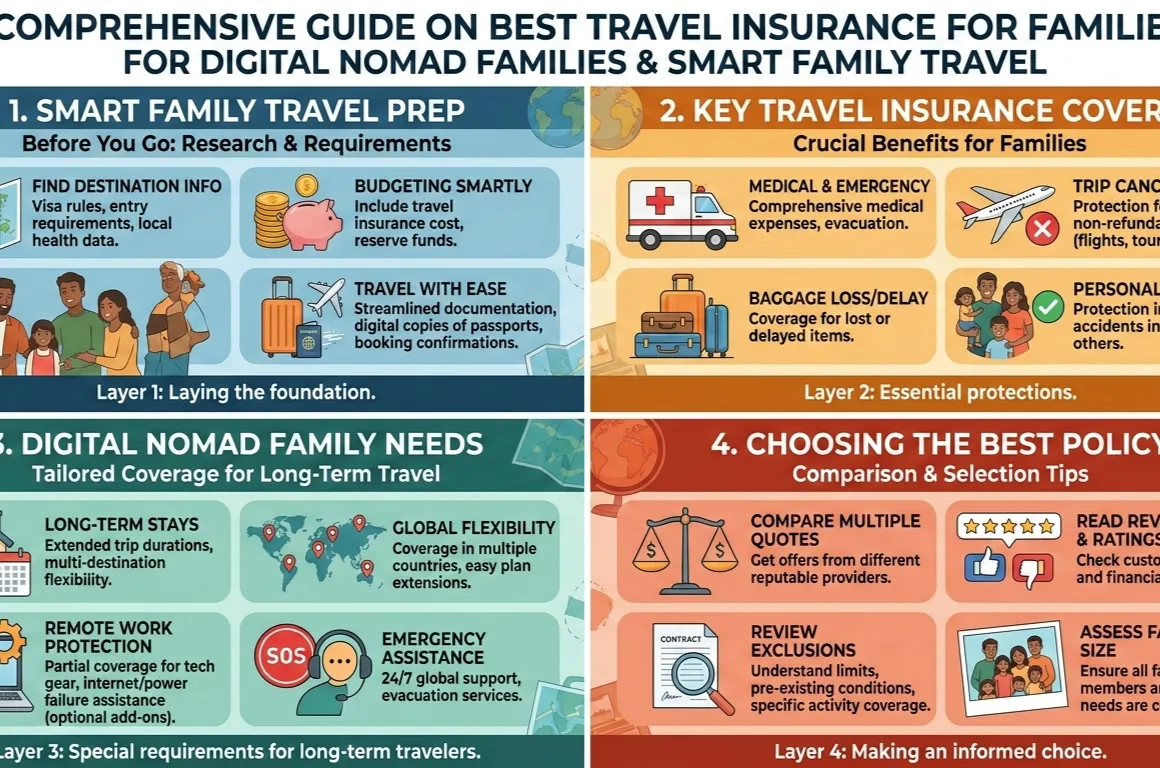
When shopping for digital nomad family travel insurance in 2026, ensure the policy contains these key clauses:
Emergency Evacuation & Repatriation
If you are traveling in remote regions (such as islands in Southeast Asia or rural South America), local clinics may not have the pediatric equipment needed for serious emergencies. Your policy must cover the cost of medically evacuating your child to the nearest international-standard hospital. Ensure your evacuation limit is at least $500,000.
Flex-Time Home Country Coverage
Look for policies (like SafetyWing’s Nomad Insurance) that offer up to 30 days of coverage in your home country for every 90 days of international travel. This is crucial for digital nomads who return home occasionally to catch up with family or friends.
Adventure and Youth Sports Riders
Nomad kids climb trees, snorkel, surf, and ride scooters. Many standard policies exclude injuries resulting from "adventure sports." Verify that your plan covers standard childhood activities, and add an adventure rider if you plan to ski, surf, or go ziplining.
High-Value Gear Protection
Since you are working on the road, your laptops, tablets, and cameras are your livelihood. Choose a policy that offers travel delay and baggage protection, or purchase a separate gear insurance rider to protect your electronics from theft or damage in transit. You can find strategies for protecting your travel budget in our guide on How to Budget for Long-Term Travel.
How to Handle a Medical Emergency Abroad
Even with the best insurance, sitting in a foreign hospital with a sick child is stressful. To navigate this smoothly:
- Contact Your Insurer's 24/7 Hotline First: If it is not a life-threatening emergency, call the helpline before receiving treatment. They will tell you which local hospitals accept direct billing, saving you from paying thousands of dollars out of pocket.
- Keep All Itemized Receipts: If you must pay upfront, request detailed, English-translated receipts and medical reports. You will need these to file your reimbursement claim.
- Maintain a Digital Health Folder: Keep copies of your children's medical history, blood types, vaccination records, and your insurance policy PDFs in an offline cloud folder.
For a step-by-step checklist on handling medical emergencies on the road, refer to our detailed guide: How to Handle Medical Emergencies Abroad.
For a complete overview of travel logistics, refer to our Ultimate Guide to Family Travel in 2026.
FAQ
Can I buy nomad insurance if we have already left our home country? Yes. One of the main benefits of nomad-specific insurance is that you can purchase it while already on the road. Standard travel insurance companies require you to be in your home country at the time of purchase, but nomad providers allow you to sign up from anywhere in the world.
Are children covered for free on nomad travel insurance? Some providers offer excellent family perks. For example, SafetyWing’s Nomad Insurance covers one child (between 15 days and 10 years old) for free per paying adult on the policy, up to a maximum of two children per family. This makes subscription-based travel insurance highly cost-effective for families.
Does nomad insurance cover routine vaccinations for my kids? No. Subscription nomad travel insurance is designed for emergencies and sudden illnesses only. If your children need routine checkups, standard vaccinations, or non-emergency dental work, you will need to pay out of pocket or upgrade to a comprehensive International Private Medical Insurance (IPMI) plan.
AdSense Placeholder (728x90 or 300x250)
Join Our Nomad Family
Get weekly tips on smart family travel, remote work strategies, and homeschooling resources delivered straight to your inbox.
We respect your privacy. Unsubscribe at any time.
Related Articles